
Best Desk Height for Gaming: Keyboard at Elbow Height, as for Work
A gaming desk and an office desk answer to the same keyboard rule, then land near opposite ends of one guideline. The two heights, the desks that sit on each, the chair-and-footrest fix for a fixed desk, and when an adjustable frame makes more sense.
What to know
- One rule for any keyboard, in OSHA's workstation guideline: elbows at about key height, shoulders relaxed, wrists straight. Games get no separate rule.
- BIFMA's G1 guideline: a fixed keyboard surface no lower than 747 mm (29.4 in), an adjustable one covering 575 to 747 mm (22.6 to 29.4 in). The fixed minimum is the top of the adjustable range.
- Secretlab's MAGNUS Metal Desk: fixed, 73.7 cm (29 in) minimum and 75.7 cm (29.8 in) maximum. IKEA's UTESPELARE: 68 to 78 cm (26 3/4 to 30 3/4 in); HUVUDSPELARE lists no height. Office frames start lower: Uplift's V3 at 57.4 cm (22.6 in) with a top, FlexiSpot's E7 at 58 cm (22.8 in) without one.
- Fixed desk too high: OSHA says to raise the chair to fit the user and add a footrest if the feet leave the floor, or to fit a keyboard tray.
- Secretlab's TITAN Evo chair comes in three sizes by body height; ask for the seat height range before pairing it with a fixed desk.
- A desk for work by day and games at night needs one keyboard height for both; a second chair with a different seat height means re-setting that chair on a fixed desk, or a second preset on an adjustable one.
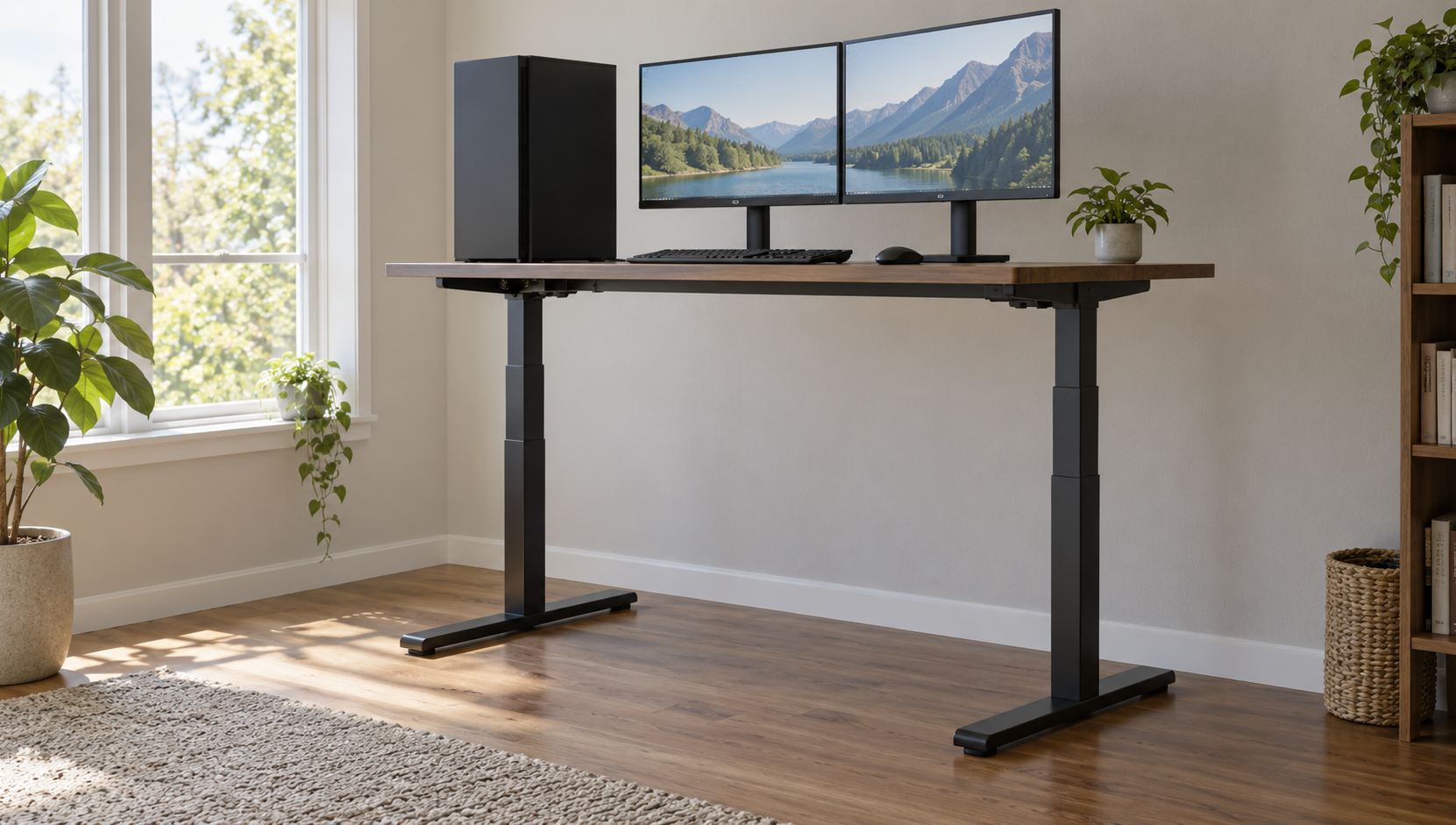
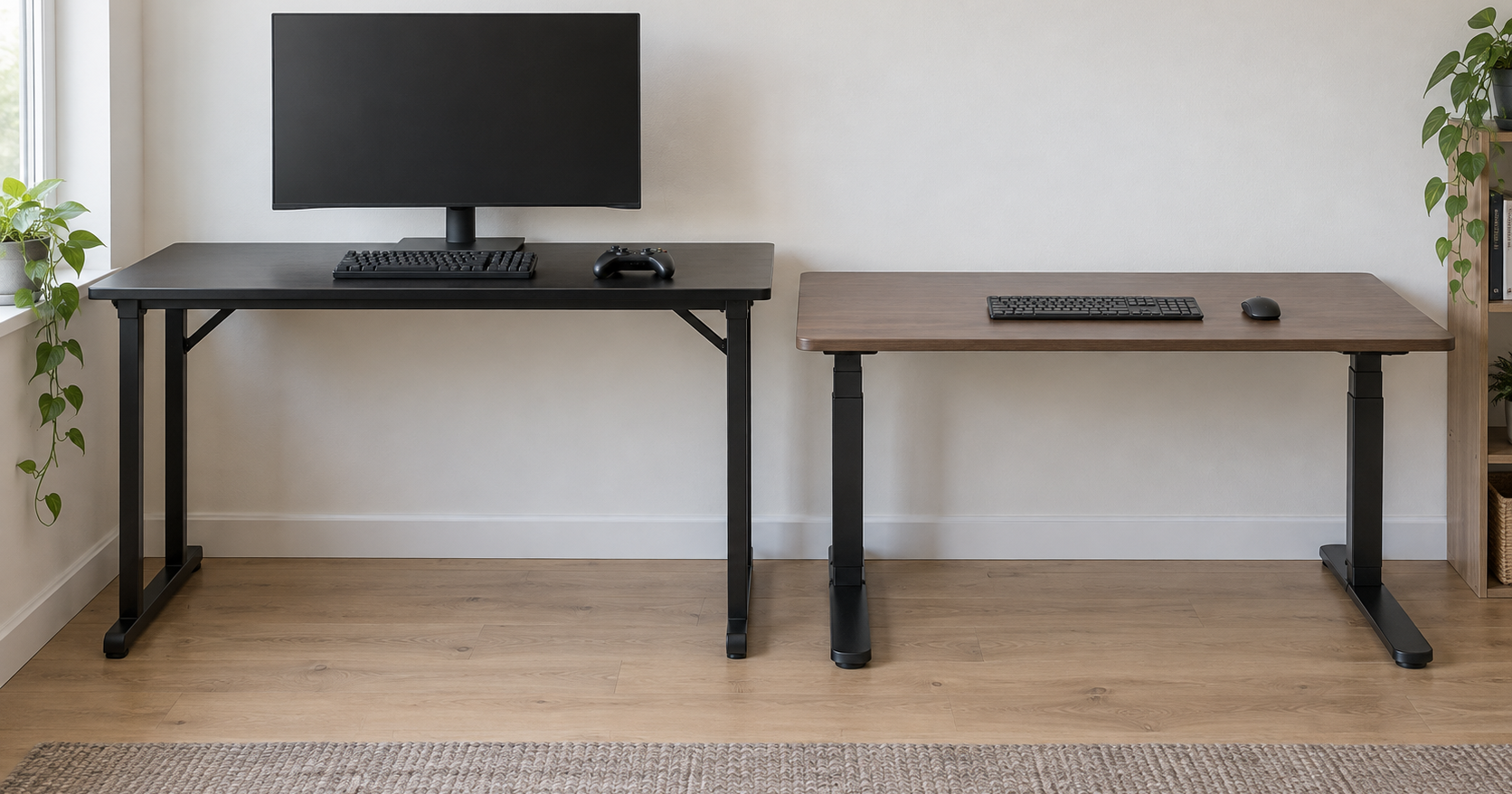
The best desk height for gaming is the same as for working, because the guidelines behind it do not ask what is on the screen. OSHA puts the keyboard at about elbow height, with the shoulders relaxed and the wrists straight. For the surface under a keyboard or mouse, BIFMA's G1 guideline gives two seated figures: 575 to 747 mm (22.6 to 29.4 in) for a desk that adjusts, and no lower than 747 mm (29.4 in) for one that does not. Gaming and office desks differ in which of the two they land on. Secretlab's MAGNUS Metal Desk is fixed at 29 in (73.7 cm), just under G1's fixed minimum; Uplift's V3 frame starts at 22.6 in (57.4 cm) with a top on, the bottom of G1's adjustable range.
This guide covers seated height for a keyboard and mouse. It does not cover standing height, which the small-office desk guide treats, and it is workstation guidance, not advice about your body.
The rule: the keyboard at elbow height
OSHA's rule is to adjust the chair height and the work surface height so that the elbows are about level with the keyboard and hang at the sides of the body, with the shoulders relaxed and the wrists not bent up, down or sideways. The keyboard goes directly in front of you, close enough that the forearms stay roughly parallel with the floor, on a work surface that OSHA puts at generally no more than 2 in (5 cm) thick.
Nothing in that rule changes with a game: a mouse and a keyboard are the same input devices whether a spreadsheet or a match is open. A controller is different, and OSHA covers only a keyboard and mouse. Our reading: with a controller in your lap nothing rests on the desk, so the elbow rule has nothing to act on. The OSHA figure that still touches the desk is the leg clearance underneath, 20 to 28 in (50 to 72 cm); its 20 in (50 cm) viewing distance to the monitor is a matter of depth, not height.
BIFMA's fixed and adjustable desk height figures
BIFMA is the trade association of business and institutional furniture makers, and G1 is the guideline Uplift means when it says its range meets ANSI/BIFMA G1-2013. For the surface that holds the keyboard and mouse, the 2013 revision sets a fixed surface at no less than 747 mm (29.4 in) and asks an adjustable one to cover at least 575 to 747 mm (22.6 to 29.4 in). The previous edition had 724 mm (28.5 in) and 563 to 724 mm. The revision raised both ends and draws on the CAESAR civilian body-size database in place of the 1988 Natick data behind the first edition.
A fixed desk cannot come down, and G1's fixed minimum is the top of its adjustable range. Our reading is that a fixed desk at that height fits whoever sits at the top of the range and asks anyone with a lower elbow height to raise the chair, while an adjustable desk comes down instead. A fixed gaming desk at 29 in sits just under that figure.
Gaming and office desk heights by model
Gaming desks, on the makers' US figures:
- Secretlab MAGNUS Metal Desk. Fixed height, 29 in (73.7 cm) minimum and 29.8 in (75.7 cm) maximum, a 0.8 in (2 cm) metal top, 220.5 lb (100 kg) load.
- Secretlab MAGNUS Pro. The sit-stand version: 25.6 to 49.2 in (65 to 125 cm), the same 0.8 in top. Its seated floor of 25.6 in sits inside G1's adjustable range but 3 in above its bottom.
- IKEA UTESPELARE. Adjustable from 26 3/4 to 30 3/4 in (68 to 78 cm), 110 lb (50 kg) max load, $279.99. IKEA's advice is to raise it "to a height that optimally suits you".
- IKEA HUVUDSPELARE. $129.99, 110 lb (50 kg) max load. IKEA lists width and depth but no height, so this is a desk you measure in the store.
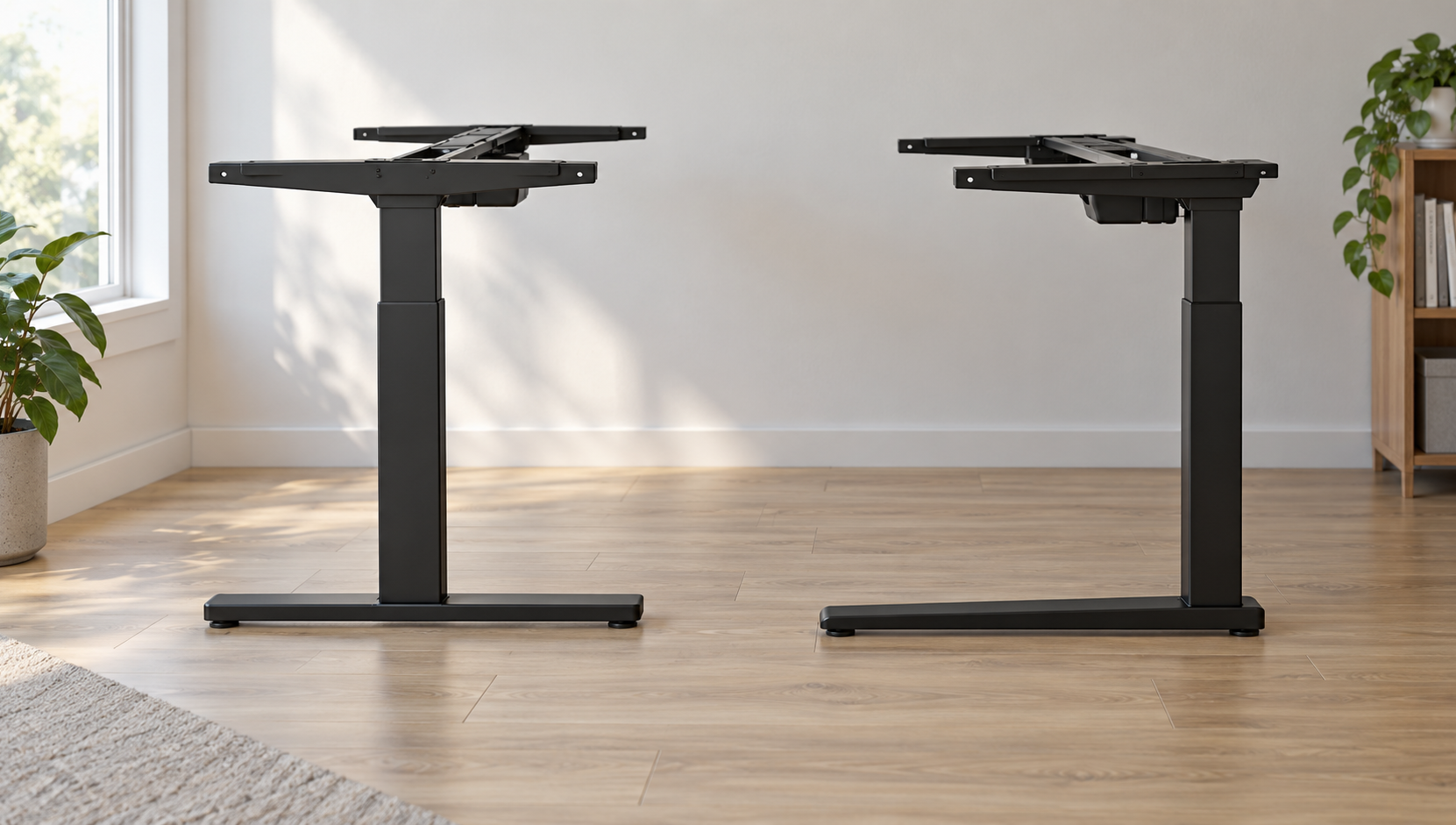
The office frames advertise the range. Uplift's V3 runs 22.6 to 48.7 in (57.4 to 123.7 cm) with a top on; FlexiSpot's E7 runs 22.8 to 48.4 in (58 to 123 cm) and its E7 Pro 25 to 50.6 in (63.5 to 128.5 cm), both without a top. Each of those seated floors is lower than the fixed Secretlab and lower than UTESPELARE's, and that floor is what you are choosing when you pick one.
IKEA prices are US list prices in USD, September 2026, before sales tax and shipping. Secretlab's US store prices the desk as a bundle with a desk mat, and we give no price for it.
Fixing a fixed desk: the chair goes up, the feet get a rest
If the surface cannot be lowered, OSHA says to raise the chair to fit the user, which on the keyboard rule means until the elbows are level with the keys, and to provide a footrest if the feet no longer rest flat on the floor. Then check the seat: OSHA counts its height right when the whole sole of the foot rests on the floor or footrest and the back of the knee is slightly higher than the seat. OSHA's other route is a keyboard tray, adjustable in height and tilt, with room for the mouse beside the keyboard.
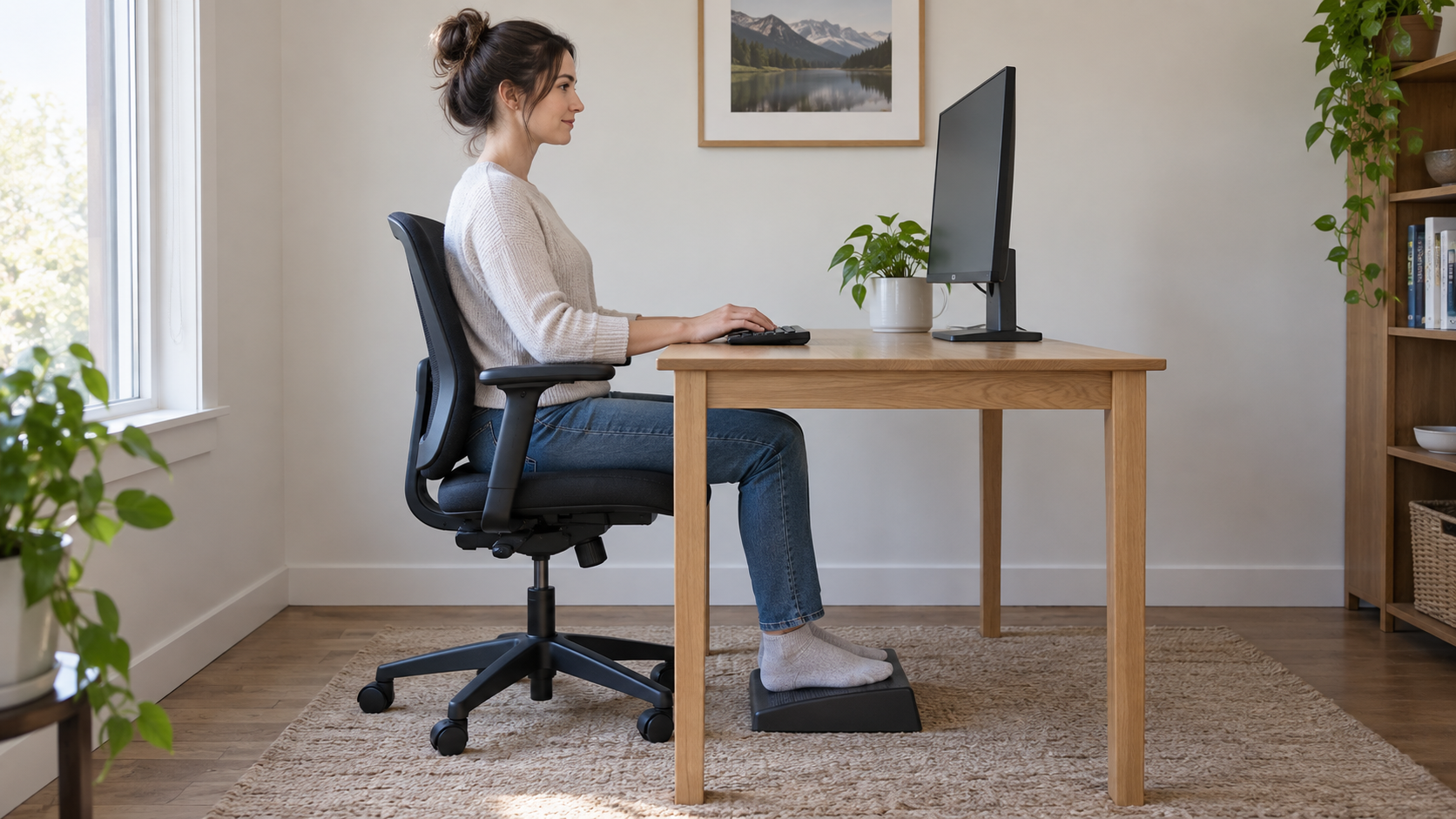
Secretlab sizes its TITAN Evo chair by body height: Small for people up to 5 ft 6 in, Regular for 5 ft 7 in to 6 ft 2 in, XL for 5 ft 11 in to 6 ft 9 in, from $579 (US price, September 26, 2026). A size label gives the body height the chair is made for; the seat height range is a separate figure, and the one to ask for before pairing any chair with a fixed desk. The footrest is the part to budget alongside it.
One desk, two jobs
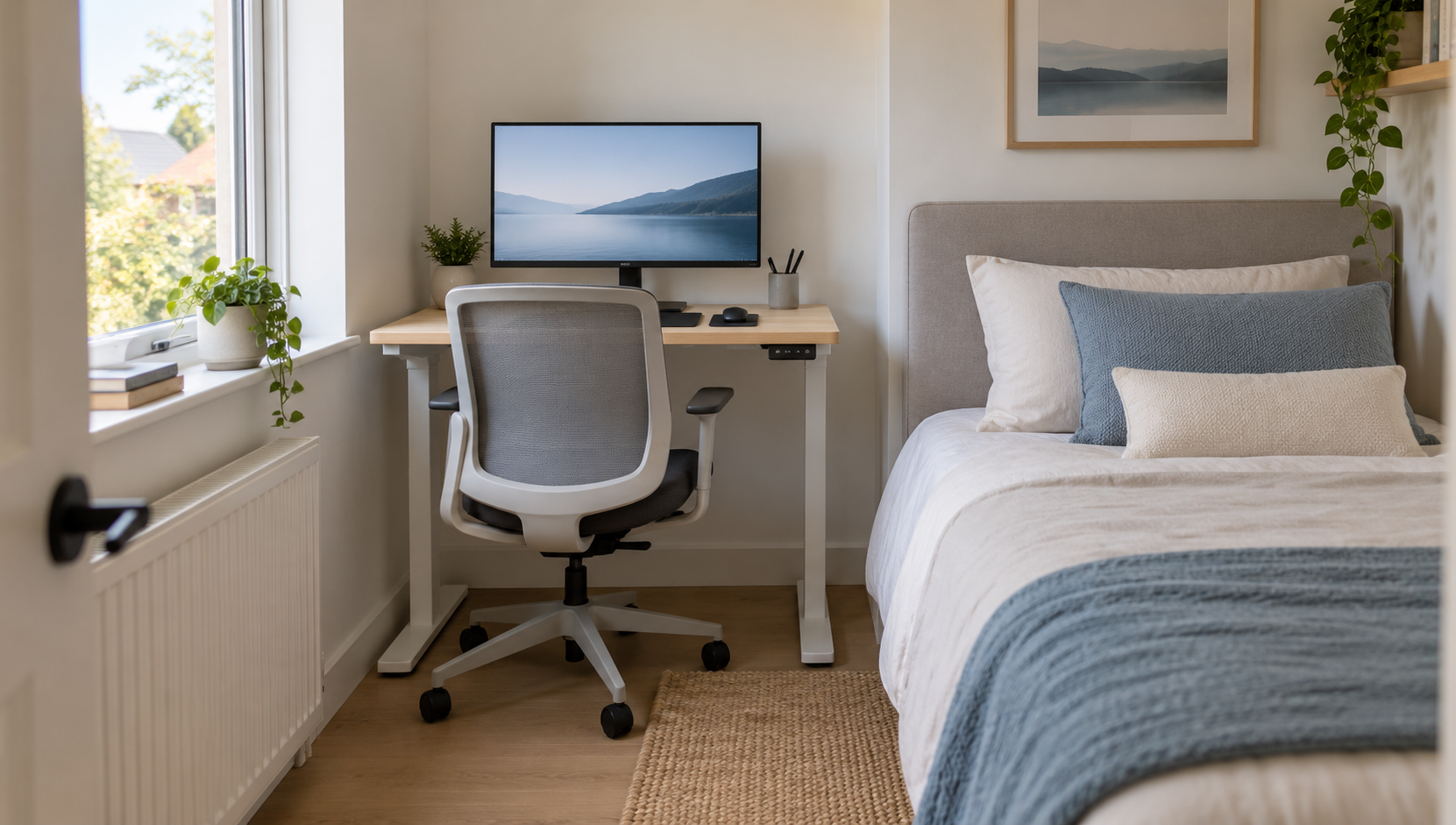
Say the desk is in the guest room, a work desk from nine to five and a game desk after dinner, and the question is whether it needs two heights. On the guideline, no: the keyboard is at elbow height in both cases, so the height is the same as long as the same person sits in the same chair. It changes in two situations. If a second chair comes out for the evening with a different seat height, the desk height follows the elbows, which on a fixed desk means re-setting that chair to match and on an adjustable desk means a second preset. And if the evening input is a controller, the keyboard rule no longer applies, and the desk is a monitor stand and a leg-room box.
For a small room we would weigh an adjustable frame on its seated floor before its standing height. A 29 in fixed desk asks the one of two people whose elbow height is lower to sit on a raised chair with a footrest every time; a frame that reaches 22.6 in comes down instead.
What we would do
For one person at a fixed gaming desk: set the chair so the elbows are level with the keyboard, add a footrest if the feet lift, and stop there. That is the guideline's own fix. For a desk that two people share, one person with two chairs, or anyone whose elbow height in their own chair sits below 29 in: an adjustable frame, chosen on its seated floor. The word gaming on the box says nothing about whether the height fits you; that is a measurement.
Sources
Everything above comes from OSHA's computer workstation guidance, a 2013 BIFMA presentation and the makers' US product pages below, accessed in September 2026; figures are in the source's units with our conversions beside them. The G1 figures are as presented in February 2013, ahead of the guideline's publication; the guideline itself is paywalled and was not consulted. How we research explains the approach.
OSHA, "Computer Workstations eTool: Keyboards" (elbows about the same height as the keyboard, shoulders relaxed, wrists straight; work surface generally no more than 2 in thick; keyboard tray if the surface or chair cannot be adjusted; forearms approximately parallel with the floor)
OSHA, "Computer Workstations eTool: Desks" (monitor at least 20 in away; leg clearance generally 20 to 28 in; raise the chair and provide a footrest if the surface cannot be lowered; provide height-adjustable desks)
OSHA, "Computer Workstations eTool: Chairs" (seat height appropriate when the whole sole rests on the floor with the back of the knee slightly higher than the seat; footrest if the seat cannot be lowered)
BIFMA Ergonomics Subcommittee (L. Hart, chair), "Top Up Your Toolbox: The Revised BIFMA Ergonomics Guideline Explained" (February 2013; input-device support surface: fixed no less than 747 mm (29.4 in), adjustable 575 to 747 mm (22.6 to 29.4 in); previous edition 724 mm and 563 to 724 mm; CAESAR civilian database in place of Natick 1988)
Secretlab, "MAGNUS Metal Desk" (fixed height, minimum 29 in, maximum 29.8 in; top 59.1 by 27.6 by 0.8 in; maximum load 220.5 lb)
Secretlab, "MAGNUS Pro" (minimum 25.6 in, maximum 49.2 in; top 0.8 in)
Secretlab, "TITAN Evo" (sizes Small, Regular and XL by body height; from $579, US price, September 26, 2026)
IKEA US, "UTESPELARE gaming desk, 63x31 1/2 in" (min. height 26 3/4 in, max. height 30 3/4 in, max load 110 lb, price)
IKEA US, "HUVUDSPELARE gaming desk, 55 1/8x31 1/2 in" (width, depth and max load 110 lb listed, no height; price)
Uplift Desk, "UPLIFT V3 2-Leg Standing Desk Frame" (22.6 to 48.7 in height range, meets the ANSI/BIFMA G1-2013 ergonomic height standard)
FlexiSpot, "Premium Standing Desk (E7)" (E7 22.8 to 48.4 in and E7 Pro 25 to 50.6 in, without a top)