

Search guides and tools

Loading search

Topic

Smart Lighting

Lamps, bulbs, and daylight, and what the numbers mean in a real room.

Latest guide

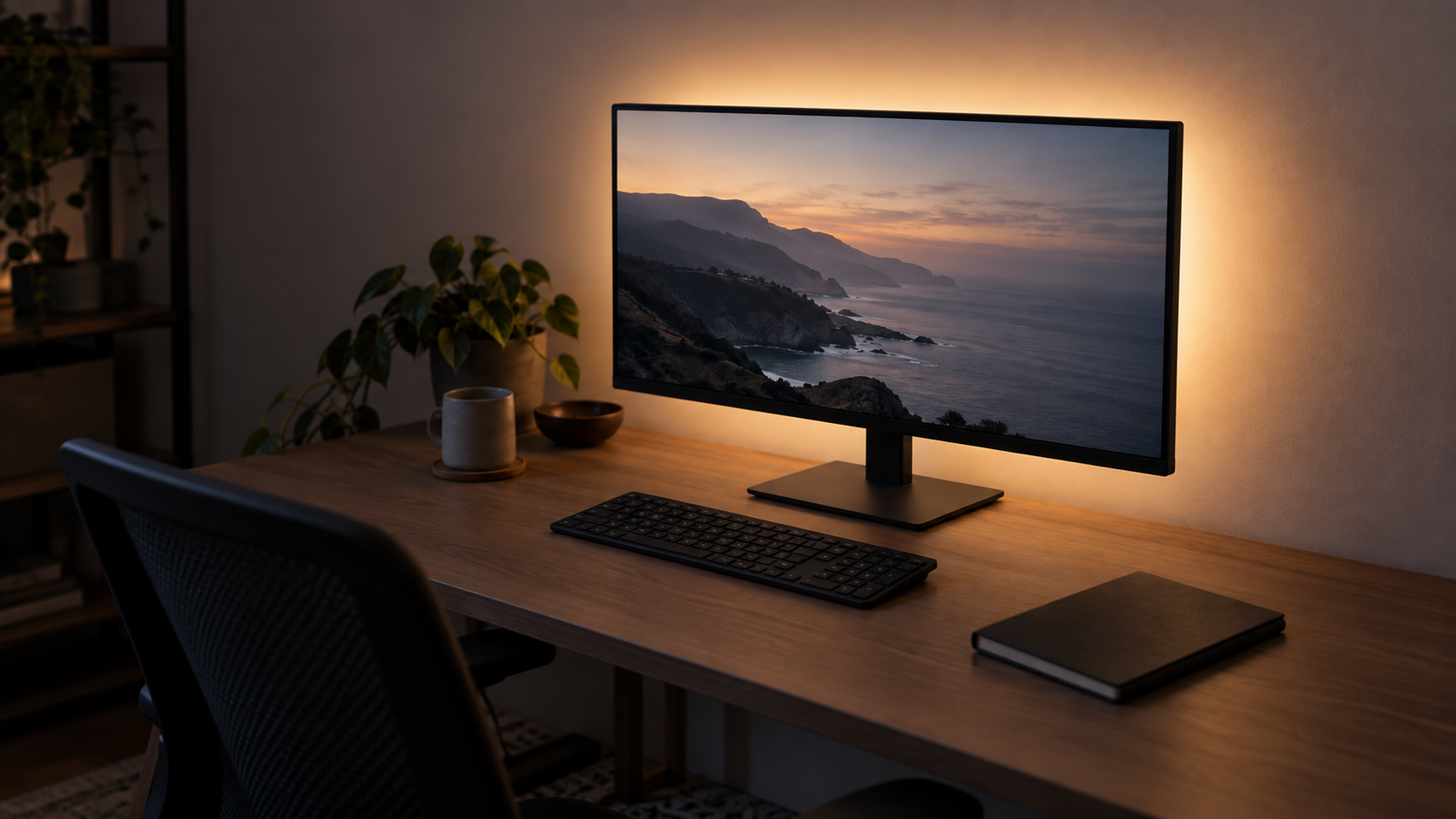
A monitor on a home office desk at dusk with a soft band of neutral light spilling onto the pale wall behind it.

Monitor Bias Lighting in a Home Office: Does It Work in Daylight?

Bias lights are sold on 6500K, a figure from a standard written for a screening room at 10 lux. What that standard asks for, when a strip makes a difference in a home office, how it differs from a light bar and a key light, and what its color does on a video call.

9 min read

Most rooms were lit for evenings, not for a day spent in front of a screen. This category covers desk lamps, ceiling light, bias lighting behind a monitor, smart bulbs, and daylight, and what happens when they are combined.

We work from the numbers that describe light rather than from impressions: lux at the desk, color temperature in kelvin, color rendering, flicker and dimming range. Where a standard or a manufacturer specification states a value, we name it and link to it.

Automation is part of it. Schedules, presence detection and scenes can move a room from work light to evening light without anyone touching a switch, and we cover which platforms make that work.

These guides are independent, and we do not sell placements. See the affiliate disclosure and how we work.